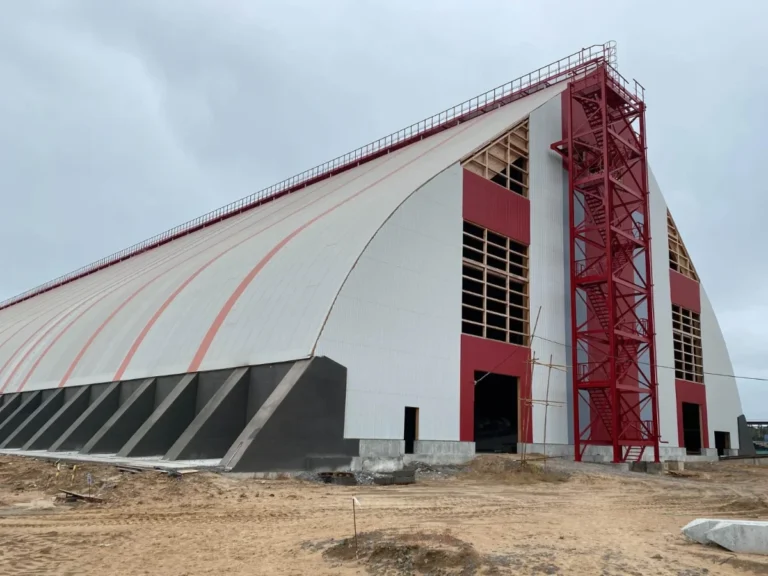

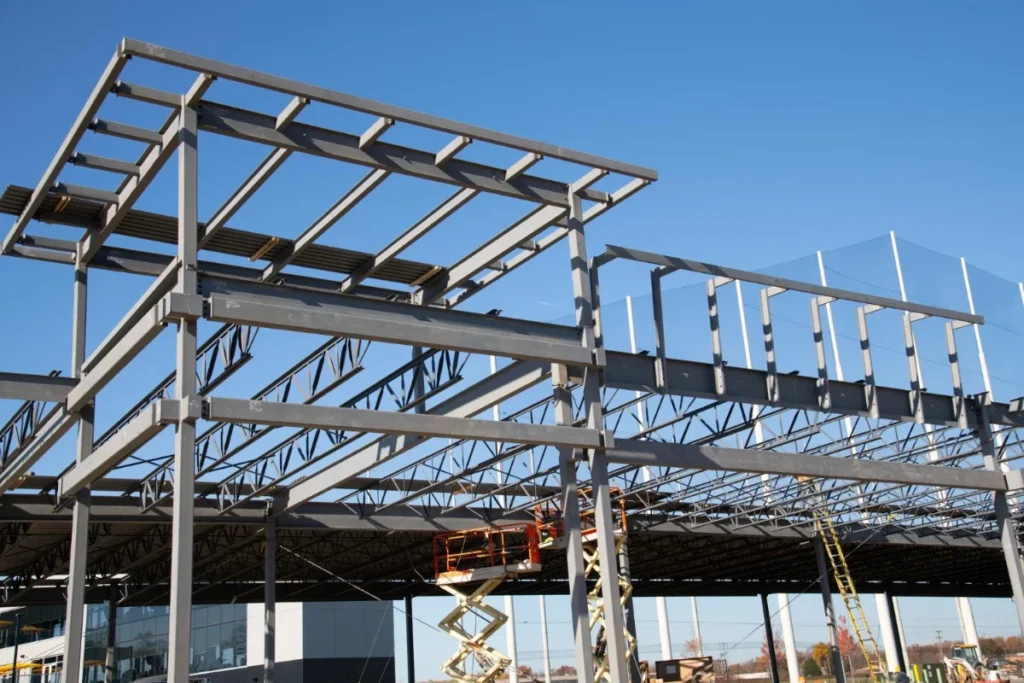
Main purpose of bracing is to hold structures very tightly so that they doesn’t fall. It ensure the building stands firm and stable.
It prevents the building from falling or collapsing under forces like wind, earthquake, or crane load. In simple words, bracing acts like a support network that ties the structure together and resists sideways forces.
Bracing is usually placed between columns, rafters, or frames in different arrangements to keep the building safe and rigid.
The Main Purpose of Bracing
- To resist lateral forces such as wind, seismic loads, and crane surge.
- To maintain alignment of frames during erection and after completion.
- To transfer loads safely from rafters and columns to the foundation.
- To ensure overall stability of the structure at all stages of construction and use.
Benefits of Bracing in Construction:
- Bracing gives stability to buildings to maintain structural integrity, preventing it from collapsing under loads.
- By providing additional strength and rigidity, bracing minimizes the risk of structural failure during heavy loads, storms, or earthquakes. It ensures the safety of both the building and the occupants, reducing hazards associated with sudden shifts or collapse.
- Bracing systems are an economical solution compared to heavier structural alternatives. They allow the use of lighter sections for columns and rafters while still maintaining strength, which reduces steel consumption and fabrication costs. This directly lowers overall project expenses while maintaining high performance.
Types of Bracing:
Rod Bracing
Rod bracing uses slender steel rods arranged diagonally between columns. It is lightweight, easy to install, and effective in resisting wind and seismic forces in low to medium-rise structures.
Pipe Bracing
Pipe bracing is made from circular hollow steel pipes, offering strength with a neat appearance. It provides higher stiffness than rods and is commonly used where both strength and aesthetics matter.
Tube Bracing
Tube bracing uses rectangular or square hollow sections, giving superior torsional resistance and uniform strength in all directions. It is ideal for heavy structures requiring extra rigidity.
Angle Bracing
Angle bracing is formed using steel angles placed diagonally or crosswise between columns. It is cost-effective, easy to fabricate, and widely used for moderate load requirements.
Portal Bracing
Portal bracing is created by connecting columns and beams rigidly, forming a frame-like action. It is mainly used where diagonal bracing is not possible, such as in areas with openings like doors or windows.
Column-Beam Bracing
Column-beam bracing utilizes the strength of vertical columns and horizontal beams, forming a rigid frame system. It is applied where large clear spans are needed without diagonal members obstructing space.